
Johnston County Public Records Map
North Carolina Public Records Law starts with broad access, but each record still has a custodian and its own exemptions. Johnston County land instruments and local vital certificates sit with the Register of Deeds. Tax Administration and GIS keep assessment and parcel data. The Clerk of Superior Court controls court files. Elections, the Sheriff, state agencies, and the Heritage Center each manage separate collections.
| Record group | Responsible office | Online route | Other access |
|---|---|---|---|
| Deeds, mortgages, plats | Register of Deeds | Public party-name index | Counter, mail, free plain email, Heritage microfilm |
| Property and tax | Tax Administration and GIS | Property Record Card and MapClick | Phone, email, office |
| Court, estate, divorce | Clerk of Superior Court | eCourts Portal | Public terminal and clerk file |
| Birth, death, marriage | Register and NC Vital Records | Certificate service portal | Eligible walk-in, mail, or state request |
| Arrest and jail | Johnston County Sheriff | Recent arrests and inmate tools | Sheriff records request |
| Historical residents | Heritage Center | Named local databases | Reading room, item copy, staff research |
The online layer is often an index, not the record itself. Juvenile, adoption, sealed, expunged, protected vital, confidential voter, active investigative, security, personnel, tax, and motor-vehicle information may be withheld by specific law. A public index row does not make every page of the underlying file open.
Johnston County Deed Record Access
The Johnston County Register of Deeds records deeds, deeds of trust, plats, assumed names, and other instruments. It also issues marriage licenses and county vital certificates. The office’s land-record information explains that records are indexed by party name rather than street address. An address-only inquiry should first use Tax Administration, then carry the owner name and book-page reference back to the deed system.
| Index control | Input | Purpose |
|---|---|---|
| Party or last name | Text | Primary grantor or grantee search |
| First name | Optional text | Narrows a surname |
| Party role | Grantor or grantee mode | Separates conveying and receiving parties |
| Instrument type | Filter | Limits deeds, mortgages, plats, or other types |
| Date range | Start and end | Restricts the recording period |
| Book/page or instrument | Identifier | Finds a known filing directly |
A result normally points to grantors, grantees, document type, recording date, book and page, instrument number, and an image where available. The first page of a recorded instrument carries official recording details and may include a grantee mailing address. Read the image for party language and legal description. Register staff do not determine clear title or prepare legal documents.
Note: The official gateway does not state an exact public-web index start year, so older coverage should never be guessed.
Johnston County Property Record Links
The Property Record Card and Tax Administration tools connect an owner name to a tax number, NCPIN, physical address, mailing address, acreage, value, building details, sale history, and deed reference. The mailing address is the tax-notice destination. The situs address is the parcel’s physical site. They may differ, and neither establishes who occupies the land.
Johnston County MapClick adds owner, address, tax number, NCPIN, deed book-page, map sheet, coordinates, and geographic searches. City Limit and ETJ layers help determine whether a planning or permit record belongs to a town or the county. The county announced a new MapClick server in July 2026, so use the current GIS gateway when an old bookmark breaks.
Property and GIS tools are free. Query tabs can expose tax information, permits, flood zones, deeds, plats, subdivisions, and district layers. Deed and plat links lead toward recorded images, while a tax card remains an assessment record rather than guaranteed title evidence.
Johnston County Court Record Channels
Johnston County District and Superior Court records are held by the Clerk of Superior Court. The North Carolina eCourts Portal supports party name, business name, record number, citation number, attorney, nickname, county, and hearing searches. Results can show case identity, party roles, filing date, status, hearings, disposition, financial information, and selected public documents.
The web does not carry every file or every era. Public self-service terminals and clerk files extend access beyond the portal. Johnston terminals can search criminal cases by defendant, case number, victim, or witness and can reach civil, estate, and special-proceeding data. Paper or electronic files at the counter supply public pleadings and judgments. Copies carry statutory charges. Divorce decrees come from the Clerk in the county that granted the divorce.
Federal civil, criminal, and bankruptcy matters for Johnston County use PACER for the Eastern District of North Carolina. PACER charges 10 cents per page with a $3 document cap under the published federal policy, while courthouse-terminal viewing is free apart from printing. Juvenile, adoption, sealed, expunged, and confidential family material remains limited.
Johnston County Vital Record Limits
The Register of Deeds issues Johnston County birth, death, and marriage certificates. North Carolina Vital Records handles statewide birth, death, fetal death, marriage, and divorce requests through its service portal. State marriage holdings begin in 1962, so older certificates should go to the issuing county.
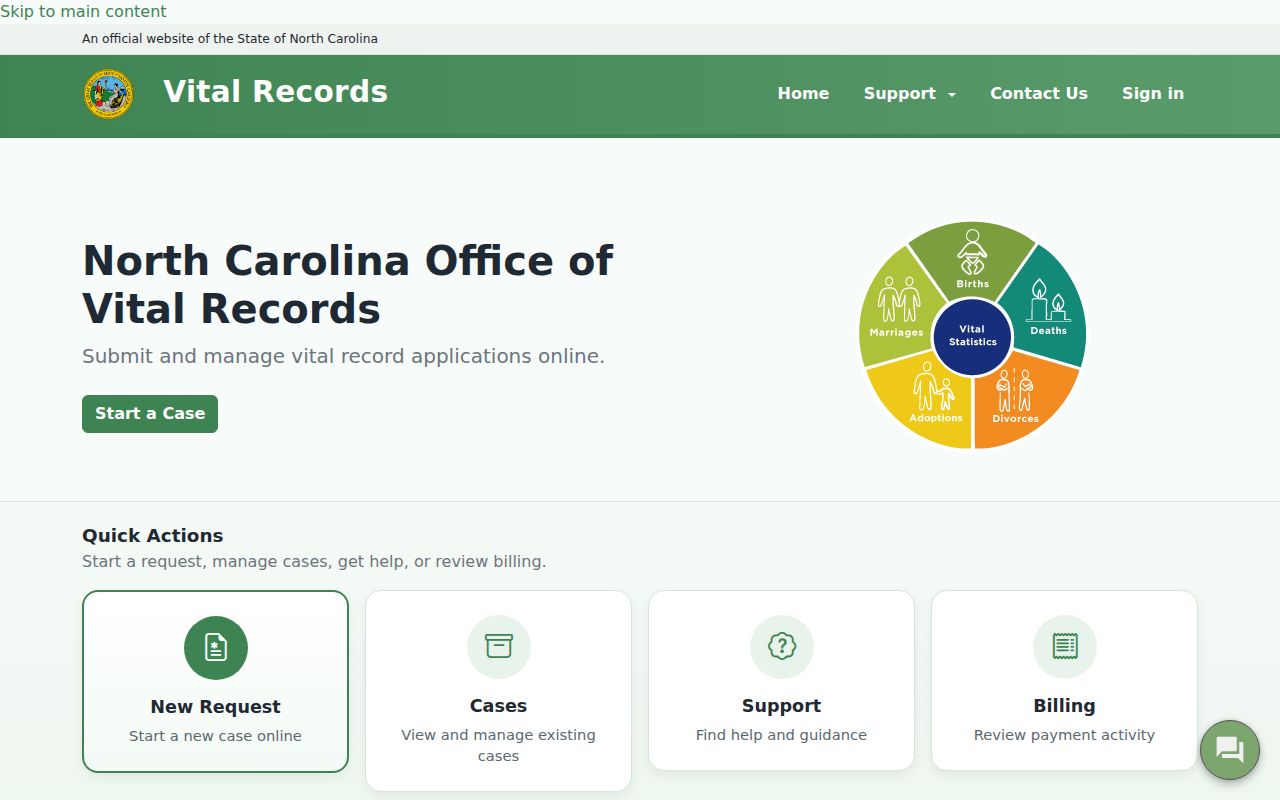
The state portal separates certificate services by event. Live fees and eligibility should be checked at ordering because the newly migrated service did not publish one stable universal fee table in the research capture.
N.C.G.S. §130A-93 restricts certified copies to eligible people and authorized representatives. Adoptions and amended birth records have added controls. Historical sources follow another path. Johnston County’s Heritage Center provides marriage bonds from 1779 to 1867, marriage registers and printed collections, and obituaries from 1801 forward. An index may establish that an event occurred without granting access to a protected certificate.
Johnston County Public Records Counters
Several core custodians are clustered in downtown Smithfield, but their responsibilities do not merge. County offices generally publish weekday hours from 8 a.m. to 5 p.m. The Register normally serves real-estate and vital customers through 4:45 p.m. A municipal minute, permit, or police report must still go to the town department that created it.
Tax Administration can be reached at 919-989-5130 for property records. GIS can be reached at 919-989-5153 for map layers. A courthouse terminal or Heritage microfilm may show more than the public web, so the counter is a primary access channel rather than a last resort.
Johnston County Arrest Record Boundaries
The county’s Sheriff online-services index leads to inmate and arrest tools. The Johnston County recent-arrest search accepts an optional first name with a required last name, or a beginning and ending date in month-day-year form. Web results cover only the most recent 15 calendar days. An arrest is not a conviction. Use the Clerk’s case record to check charges, disposition, and later court action.
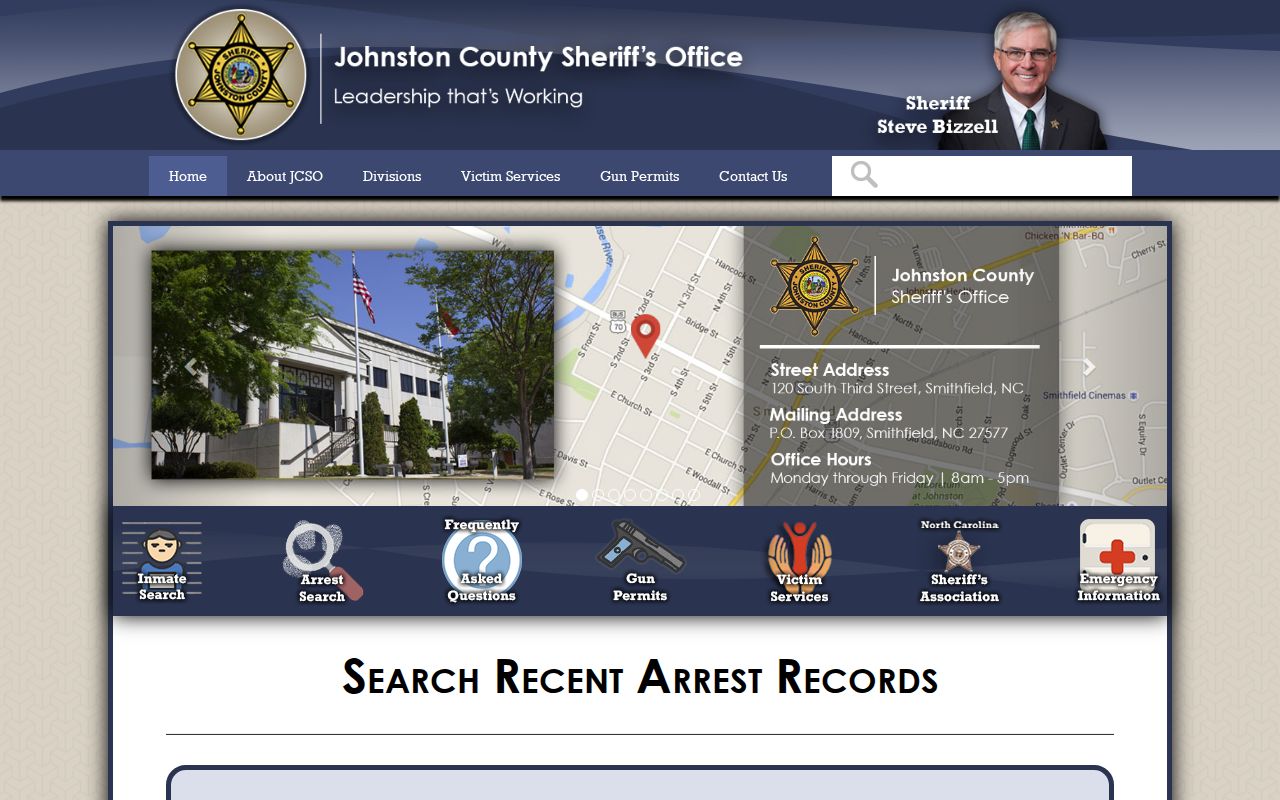
The screenshot records the name and date modes available at capture. For older or underlying law-enforcement material, use Sheriff procedures and account for N.C.G.S. §132-1.4 limits on criminal-investigation records. State custody and supervision records use the NC Adult Correction search, not the county jail tool.
The North Carolina Sex Offender and Public Protection Registry provides name and address or map searches.
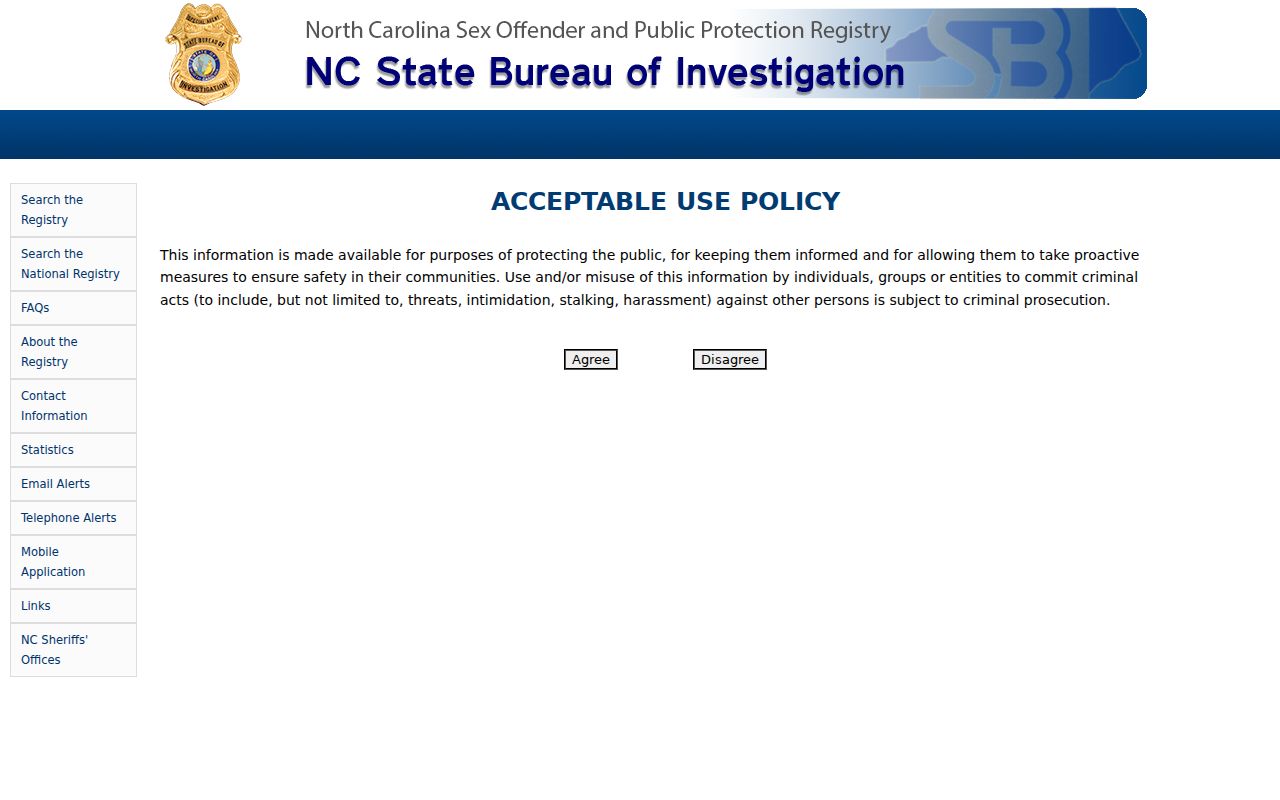
Registry information supports public safety, but an address must be verified as a current registration record. The state warns that illegal acts against a registrant may lead to prosecution.
Johnston County Record Copy Costs
Plain Register land copies cost 10 cents per page, while a certified land copy costs $5 for the first page and $2 for each added page. The Register can email plain documents free when the requester supplies a book and page. Mail requests should include that identifier, payment, and a self-addressed stamped envelope. Recording fees, which are paid to file a new instrument, are different from copy charges.
The Heritage Center charges $5 for a known item, such as an identified newspaper article, will, marriage record, or photograph. Open research starts at $40, while lineage-society work has an $80 minimum. Locating a specific item before asking staff can sharply reduce cost. Court copies use statutory fees. The live vital-record checkout controls its certificate charge.
Under N.C.G.S. §132-6.2, an agency may charge actual reproduction cost and a reasonable special service charge when extensive technology or staff work is required. The charge must reflect actual added cost, and the requester may ask for an estimate. Narrow dates and named identifiers help avoid needless work.
Closed Johnston County Record Fields
North Carolina access law is broad, not absolute. Adoption and juvenile records, sealed or expunged court matters, confidential vital data, protected voter identifiers, DMV personal information, and defined personnel, tax, security, and emergency data can be closed. Criminal investigative records receive their own treatment. A custodian should identify the legal reason for withholding material.
- Custodian
- The office responsible for keeping and producing a record.
- Index
- A finding tool that points to an underlying document or file.
- Certified copy
- An authenticated office copy, normally carrying a formal certification.
- Exemption
- A law that withholds a record or field from ordinary public access.
Voter dates of birth, Social Security numbers, email addresses, driver-license numbers, ID photos, and ID copies are confidential under N.C.G.S. §163-82.10. Qualifying Address Confidentiality Program participants and certain protected voters can also shield a residence address. Recorded-document redaction changes eligible online display, not the historical existence of the legal filing.
Johnston County Archive Record Fallback
Modern portals cannot replace Johnston County’s older record series. Heritage Center deed microfilm runs from 1759 to 1947, court-related material begins in 1712, wills begin in the county’s early years, and marriage and newspaper holdings reach across the eighteenth and nineteenth centuries. Searchable census, obituary, headline, voter, deed, and family-history databases help identify the volume or item needed.
Reading-room admission is free. Written research requests should include the person’s name, known birth, death, or marriage dates, town or township, and residence span. Older records may use initials, married surnames, variant spelling, or former county boundaries. Search surname beginnings and compare associates, age, parcel, and place before rejecting a possible match.
Note: A portal no-result should lead to variant names, counter files, and archival indexes, not a claim that no record exists.
Request Johnston County Public Records
N.C.G.S. Chapter 132 allows inspection at reasonable times and requires copies as promptly as possible. North Carolina sets no single fixed response-day deadline. A requester does not need to explain a purpose or use special wording. The key task is directing an existing record request to the office that holds it.
The Johnston County web request form routes general county records by department.
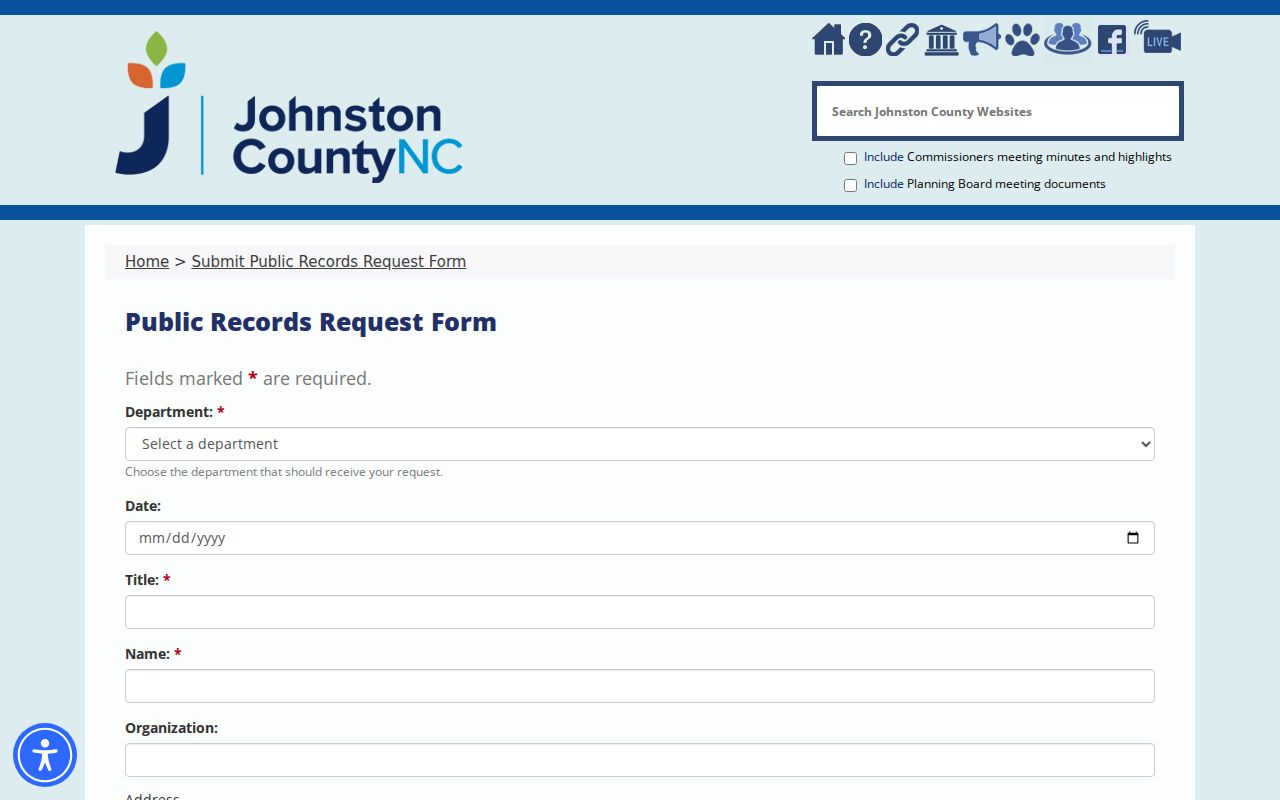
The form asks for department, date, title, name, organization, address, email, phone, and a request description. Courts, elections, vital certificates, town records, and Sheriff files may require their specialist routes instead.
- Identify the creator and custodian, including town versus county jurisdiction.
- Search the public index and save names, dates, case numbers, parcel IDs, or book-page references.
- Describe the existing record, date span, and preferred electronic format with precise terms.
- Ask for a cost estimate and narrow the scope if extensive service work is proposed.
- Request the legal basis for a denial; civil enforcement is available under N.C.G.S. §132-9.
Lawful personal use. Johnston County open records may support family, property, court, and civic research. Never use them to stalk, harass, intimidate, or harm anyone.