
Johnston County Directory Landscape
Johnston County people directories do not live in one master database. Each keeper lists people for a defined reason. County and state contact pages identify public roles. School pages point to district and campus staff. Land, tax, voter, and business systems list people in a recorded civic or legal role. The Heritage Center preserves name sources that stretch far beyond current web listings.
| Directory source | People shown | Record keeper | How to use it |
|---|---|---|---|
| County contacts | Departments, officials, and published staff contacts | Johnston County | Free department and contact pages |
| NC Employee Directory | State employees | NC.gov | Free name and agency search |
| JCPS and college contacts | School and college personnel | JCPS and Johnston Community College | District, school, and department pages |
| Tax and deed indexes | Owners and recorded land parties | Tax Administration, GIS, Register of Deeds | Free portals, counter, email, mail, and microfilm |
| Business and license records | Business officials, DBA owners, and licensed professionals | NC Secretary of State and licensing boards | Free online searches; older DBAs at county office |
| Heritage collections | Past residents, students, relatives, and burial records | Johnston County Heritage Center | Online indexes, reading room, microfilm, and staff research |
Choose by role and date. A state worker belongs in the employee directory, while an appointed county board member may appear in rosters and meeting minutes. Tax records answer ownership questions, not who lives at a site. Yearbooks, census material, obituaries, church records, and cemetery directories are stronger for a past resident. Since every source describes a person at a given time, cross-check two dated records before treating a match as the same individual.
Johnston County Government Directories
For county work contacts, begin with the Johnston County department and employee contact directory. It organizes published contacts around county offices and services. Boards, appointments, agendas, and minutes can preserve the names and terms of commissioners or appointees after a current roster changes. Town government is separate. Smithfield, Clayton, Selma, Benson, Four Oaks, and the county’s other municipalities keep their own officials, minutes, and department contacts.
The county directory shown here is the official starting point for a Johnston County department or employee work contact.
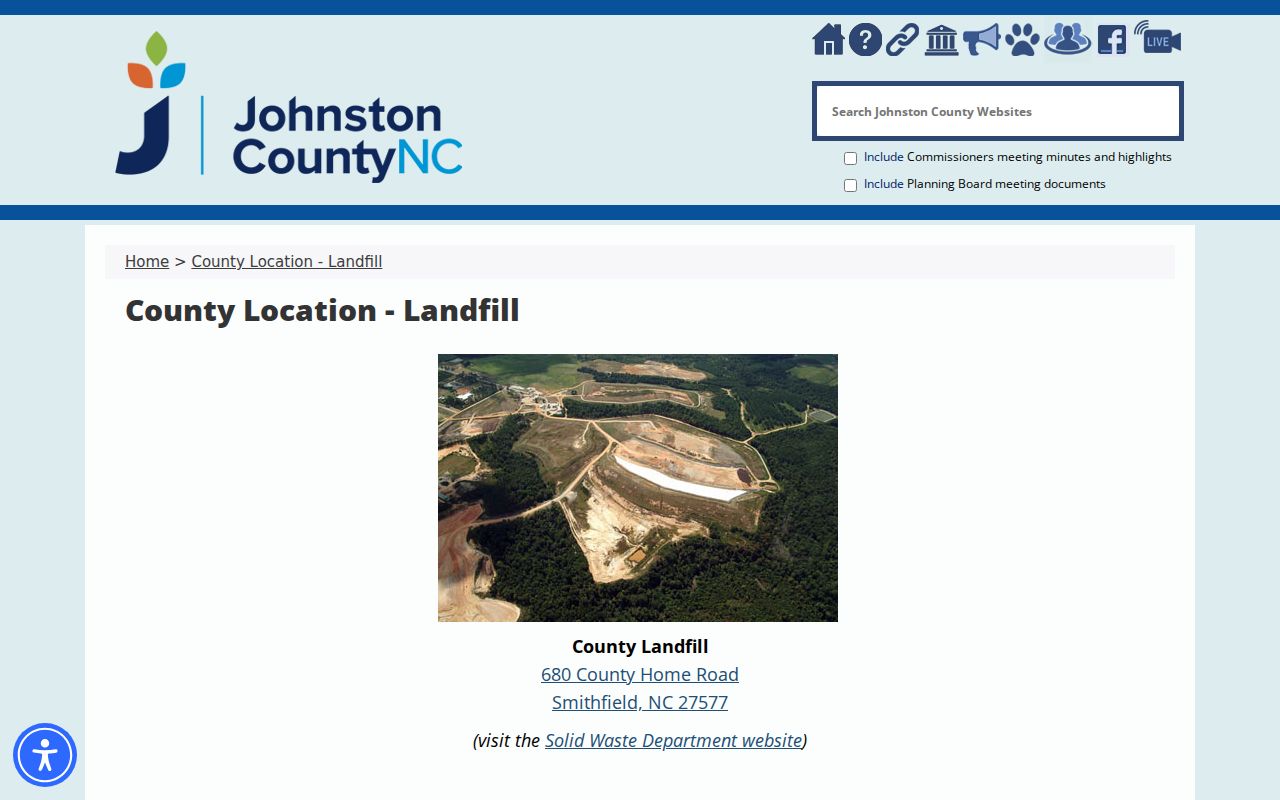
Its department-based layout also helps when a name is absent, since the office’s main contact provides a direct fallback.
| Entry element | What it establishes |
|---|---|
| Name | The person or named county contact |
| Title or department | The public role and part of government |
| Work phone or email | An official contact route when published |
| Office page | Services, staff context, and a main-line fallback |
If a county contact does not appear, call the department’s published main line. For a town employee, use that municipality’s administration or clerk page rather than the county form. Meeting minutes can supply an older official’s service period. A Chapter 132 request is the last route for a county-held public roster, and the separate Johnston County public records search explains that process.
State Directories for Johnston County
The NC Employee Directory covers state employees whose work may touch Johnston County even when their office belongs to a statewide agency. Search by combined first and middle name, last name, or agency. None of those fields is required, and Search and Reset controls run or clear the query. Results can provide employee name, agency placement, work telephone, email, and a work title or location when the agency publishes them.
| Search field | Input | Required | Use |
|---|---|---|---|
| First/Middle Name | Text | No | Combined given-name search |
| Last Name | Text | No | Surname search |
| Agency | Dropdown or autocomplete | No | Narrows results to one state agency |
| Search / Reset | Buttons | Not applicable | Runs or clears the directory query |
The official NC Employee Directory search form displays those filters in a compact layout.
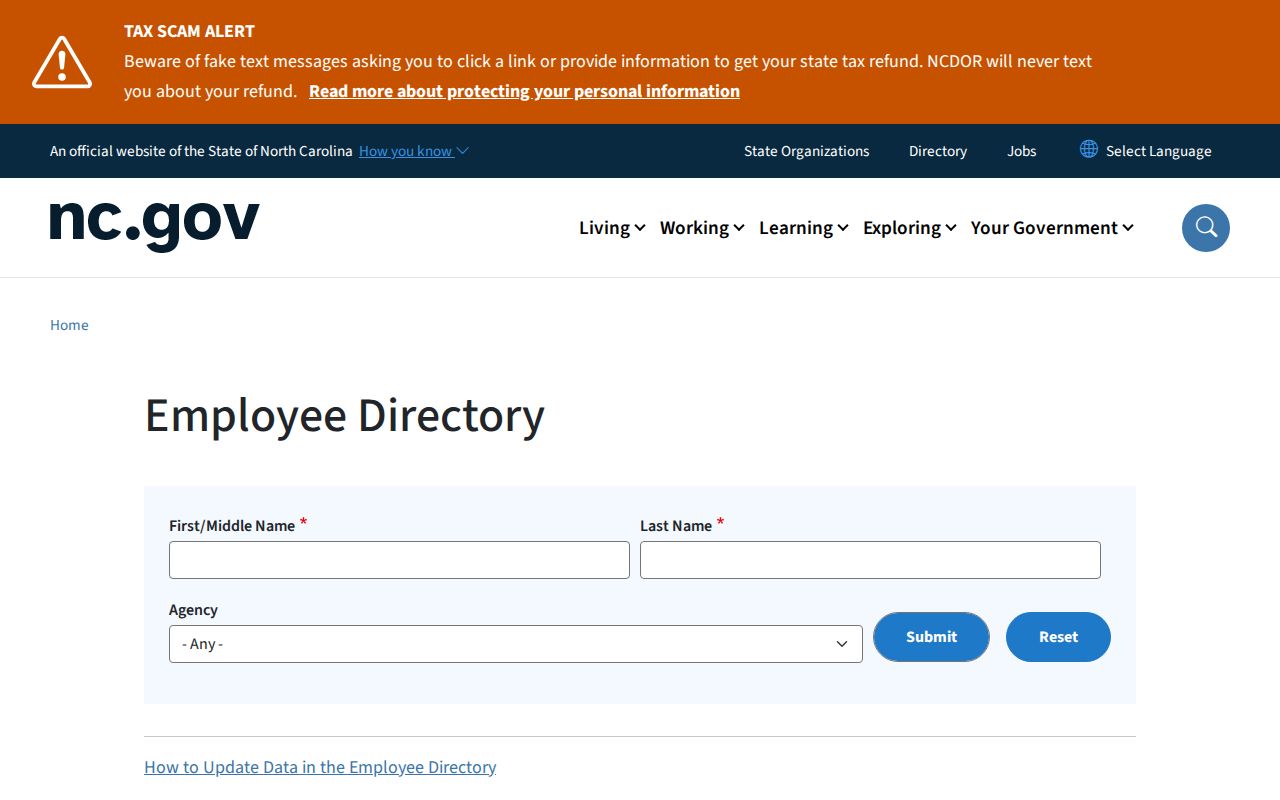
Agency selection is especially useful when a common name returns more than one state work contact.
Johnston County Education Directories
Johnston County education contacts are decentralized. Johnston County Public Schools and individual school pages identify staff, role, campus, email, and sometimes a work phone. Johnston Community College publishes department and faculty contacts. The research did not verify a stable field-by-field JCPS search form, so school and district pages should be treated as the live access path rather than assuming one countywide search box.
The NC Department of Public Instruction directory adds a broader state education layer. Its filter matches Deputy, Office, Section, Name, or Status. Entries can show last and first name, title, email, phone, division, office, section, and whether the person is an employee, temporary employee, or contractor. Keep that status and the date of the page with any saved result. School assignments and work relationships change.
When a current name is missing, contact the school or department office. For an older teacher or classmate, move to the Heritage Center’s published yearbook holdings. Private alumni or school-community rosters may be limited to members, and their absence from public access does not make them county records.
Note: JCPS directory paths can change; start at the district or school page when a saved staff-directory link no longer resolves.
Johnston County Owner Directories
Land systems work as role-based people directories. The Johnston County Tax Administration search connects an owner to a tax number or NCPIN, physical or situs address, mailing address, values, acreage, and deed references. Situs means the land’s physical location. Mailing address means the place where the county sends owner notices, and it may be far from the parcel. Neither field proves that the named owner lives there.
MapClick expands the directory by accepting Tax Number, Address, Deed Book/Page, Owner Name, MapSheet, or NCPIN. Geography options include township, city limit, ETJ, subdivision, school, and service districts. From a parcel result, deed and plat links can carry the name into the Register of Deeds index. That index lists grantors, who transfer an interest, and grantees, who receive one. It is searched by name, not by street address.
Access is not web-only. Tax Administration and GIS offer free portals and office help. Register staff can supply plain copies by email, mail a requested item when the book and page are known, or assist at the counter. The Heritage Center holds deed microfilm from 1759 through 1947. This chain supports current owners, prior owners, heirs, and old parcel research without treating ownership as occupancy.
Johnston County Business Directories
The NC Secretary of State business registration page leads to the live entity and officer search. Entity-name mode supports Search For, Search Type, word matching, and an organization name. Individual or officer searching uses last, first, and middle name. Results commonly identify the SOSID, legal name, status, formation, registered agent and office, principal or mailing address, officials, and filing images. The NC assumed-name directory is valuable when a business name differs from its owner’s name. It offers entity type, words, search text, owner-name fields, a date range, printable view, and county filters that include Johnston. Statewide coverage begins December 1, 2017. Older assumed-name filings remain with the Johnston County Register of Deeds.
The official North Carolina assumed-name search shows how Johnston County can be selected within the statewide directory.
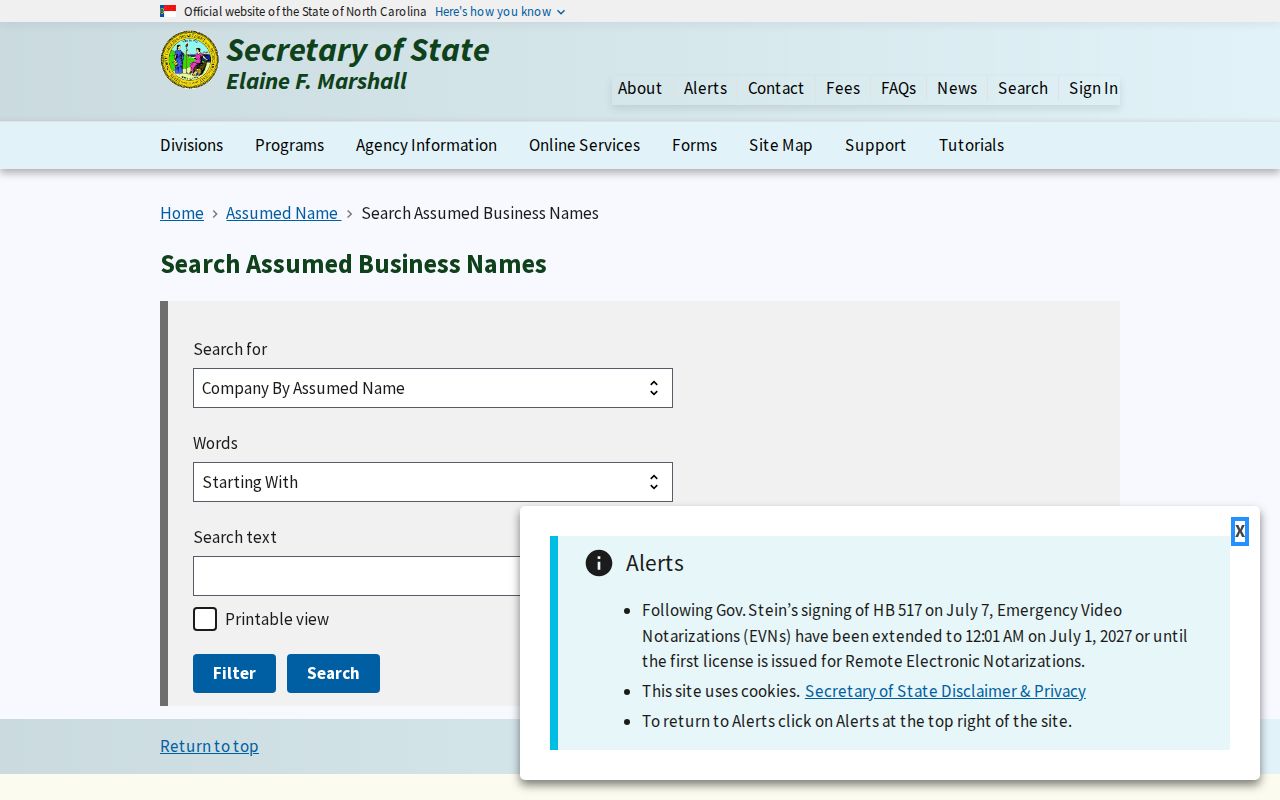
The county checkbox keeps a statewide result set focused on filings connected with Johnston.
A result may list assumed name and SOS ID, entry time, filing type and county, engaged counties, owners, and a filing PDF. That record proves a filed business role at a date. It does not establish a private home address or speak to a person’s character.
Johnston County License Directories
North Carolina professional searches are maintained by the board that regulates each field. The state’s professional licenses and permits directory and NCBOLD help identify the right agency. They are routing tools, not always the final licensee list. Follow through to the board’s verification page.
Useful directories include the State Bar, Medical Board, Board of Nursing, Real Estate Commission, Licensing Board for General Contractors, and cosmetology board. Depending on the board, a result may show name, license number and type, status, issue or renewal dates, public work location, classification, and public discipline. These sources are well suited to Johnston County’s mix of construction, health, real estate, education, manufacturing, and agribusiness roles.
Search a full Johnston County name first, then use a license number or location filter when available. Confirm the board’s update date and whether the status is current. A valid result verifies the regulated role shown on that date. Similar names should be separated with license numbers and board details, not guessed from a place alone.
Historical Johnston County Directories
The Johnston County Heritage Center combines online indexes with a reading room in Smithfield. Its databases include census transcriptions, obituaries from 1801 forward, Smithfield Herald headlines from 1885 through 2007, marriage bonds, the 1902 voter register, deeds, historical aerials, and county-specific family indexes. Printed holdings include yearbooks from the 1920s to the present, cemetery directories, Bible records, family histories, and military records.
| Collection layer | Documented span | Best use | Access channel |
|---|---|---|---|
| Obituary index | 1801 to present | Relatives, married names, places, cemetery | Online index and reading room |
| Smithfield Herald headlines | 1885 to 2007 | Name and event leads | Index, then reading-room newspaper access |
| School yearbooks | 1920s to present; titles vary | Students, faculty, and school year | Published holdings and reading room |
| Deed microfilm | 1759 to 1947 | Owners and land parties | Heritage Center microfilm |
| Church and cemetery files | Varies by collection | Burials, congregations, and family links | Printed files, microfilm, and staff inquiry |
The Heritage Center contact page lists free reading-room access from 9 a.m. to 5 p.m. Monday through Friday, with Saturday visits by appointment. Call 919-934-2836 or email heritagecenter@johnstonnc.gov. Written staff research costs $40 minimum and $40 per hour. If a newspaper item, will, marriage record, or photograph is already identified, the known-item copy service costs $5 and can deliver a scan after payment.
- Current directory
- A rolling list that reflects a work or public role when the page was viewed.
- Yearbook
- A roster tied to one school and one academic year.
- Reverse directory
- A source arranged by address rather than by name.
- Name index
- A finding aid that points to a source record, not a full substitute for it.
The official research did not locate a precise run of Polk city directories or published reverse-directory years. Ask Heritage staff about uncatalogued telephone or address directories. Do not assign dates that the collection page does not state.
Johnston County Family Name Indexes
Some of Johnston County’s strongest people directories were built to recover names that standard listings miss. The Heritage Center’s slave-name index and cohabitation and slave-marriage index help reconstruct families whose ties were omitted or distorted in older government records. Cemetery directories, Bible records, church microfilm, wills, and probate material can then support those links.
The 1902 voter registration database accepts a surname beginning and can search by age alone. An entry may include surname, given name, age, and an ancestor name where recorded. Some fields are blank. It reflects the law and registration practice of 1902, including the exclusion of women from nationwide suffrage at that time, so it is not a full resident census.
The archive’s scale adds depth: about 50,000 images, 800 microfilm reels, and 400 private collections. Start with the obituary or headline index when a death date or family group is known. Then compare census households, cemetery records, deeds, and yearbooks. Boundary changes after Johnston County’s creation in 1746 can place an early record in a later county even when a family did not move.
Johnston County Phone Directory Gap
No authoritative current countywide residential white-pages directory was located. Official government, school, land, and business sources should take priority over commercial lists. For an old phone number or address, ask the Heritage Center whether telephone books or reverse directories exist beyond what is cataloged online.
When no phone book is available, substitute sources can still form a dated trail. Tax cards and deeds connect owners to land. Census records and yearbooks identify households or school communities. Newspapers and obituaries link relatives, former places, and cemetery names. Historical aerials help when a road, farm, or subdivision no longer matches the modern address.
Government work directories answer one question, property and voter directories answer another, and historical collections reconstruct a third. Keeping those roles separate prevents a stale work listing or ownership record from being mistaken for a current personal address.