
Start a Johnston County People Search
Pick the first record by what is known, not by what seems most comprehensive. A full name can go into court, deed, voter, business, and license searches. An address belongs first in the tax card or MapClick search. A family event points toward marriage, obituary, estate, or vital-record channels. Old school ties are best tested against Johnston County Heritage Center yearbooks and newspapers.
Keep the date and the role beside every result. “Owner,” “grantor,” “defendant,” “registered agent,” and “voter” describe different links to a person. They do not prove a current home address. Match one more fact, such as a spouse, parcel, township, age, business, or case number, before deciding that two records name the same person.
- Write down the exact name, variants, known dates, town or township, and any old address.
- Use Tax Administration or MapClick for an address, then carry the owner name and deed reference into land records.
- Search North Carolina eCourts by party and narrow the location to Johnston County.
- Use Heritage Center indexes for obituaries, yearbooks, censuses, and older name spellings.
- Ask the correct custodian for the underlying file when an online index is incomplete.
Use records lawfully. Public access never permits stalking, harassment, intimidation, or harm. Verify identity and contact people with care.
Johnston County People Records Offices
Smithfield is both the county seat and the center of Johnston County record access. The Register of Deeds records land instruments and issues county vital records. Tax Administration links owner names to parcels, physical addresses, and mailing addresses. The Clerk of Superior Court keeps civil, criminal, estate, foreclosure, divorce, and special-proceeding files. These offices answer different questions, even though they sit within a few blocks.
The Johnston County public records process depends on the office that created or holds the file. Town minutes, permits, and police reports stay with the relevant municipality. County deeds, taxes, elections, and trial-court files remain countywide. Confirm a parcel’s city limit or extraterritorial jurisdiction in MapClick before requesting a planning record.
Register of Deeds
207 E. Johnston Street, Suite 209
Smithfield, NC
919-989-5160
All three offices publish weekday hours of 8 a.m. to 5 p.m. The Register’s vital and real-estate counters normally serve customers until 4:45 p.m.
Johnston County Address Search Trail
A street address does not belong in the Register of Deeds name index. Begin with the Johnston County Tax Administration search, which can return an owner, tax number or NCPIN, physical address, mailing address, value, acreage, sale reference, and deed book and page. Mailing and physical addresses are separate facts. The first is where tax notices go; the second is the site of the land. Neither alone proves that the owner lives there.
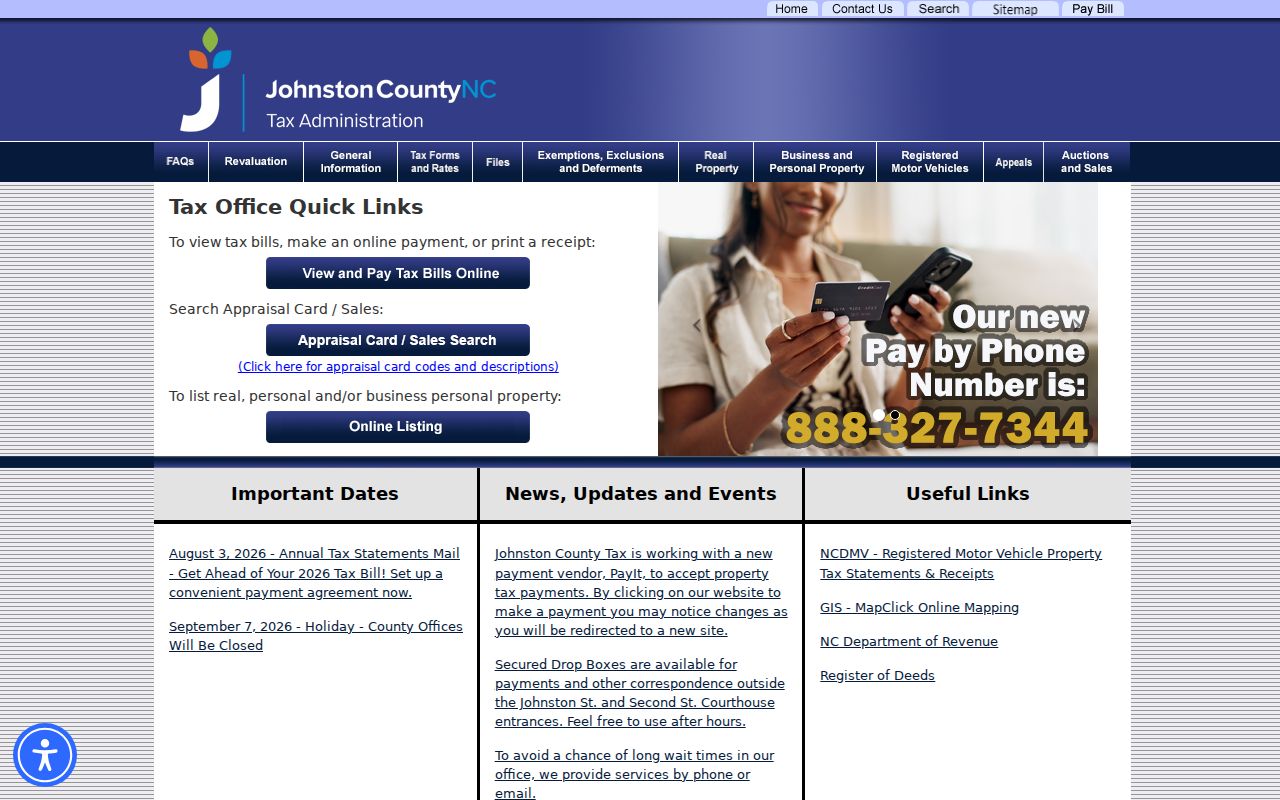
The property-search entry puts appraisal cards, sales, bills, and GIS tools in one official path. Record the inspection date because ownership and tax status can change.
Next, open the Johnston County GIS search gateway. The county’s MapClick instructions document searches by address, owner name, tax number, NCPIN, deed book and page, or map sheet. The map can also locate a township, city limit, ETJ, subdivision, school district, and fire or rescue district. A July 2026 server change means an old saved bookmark may fail even while the county gateway remains current.
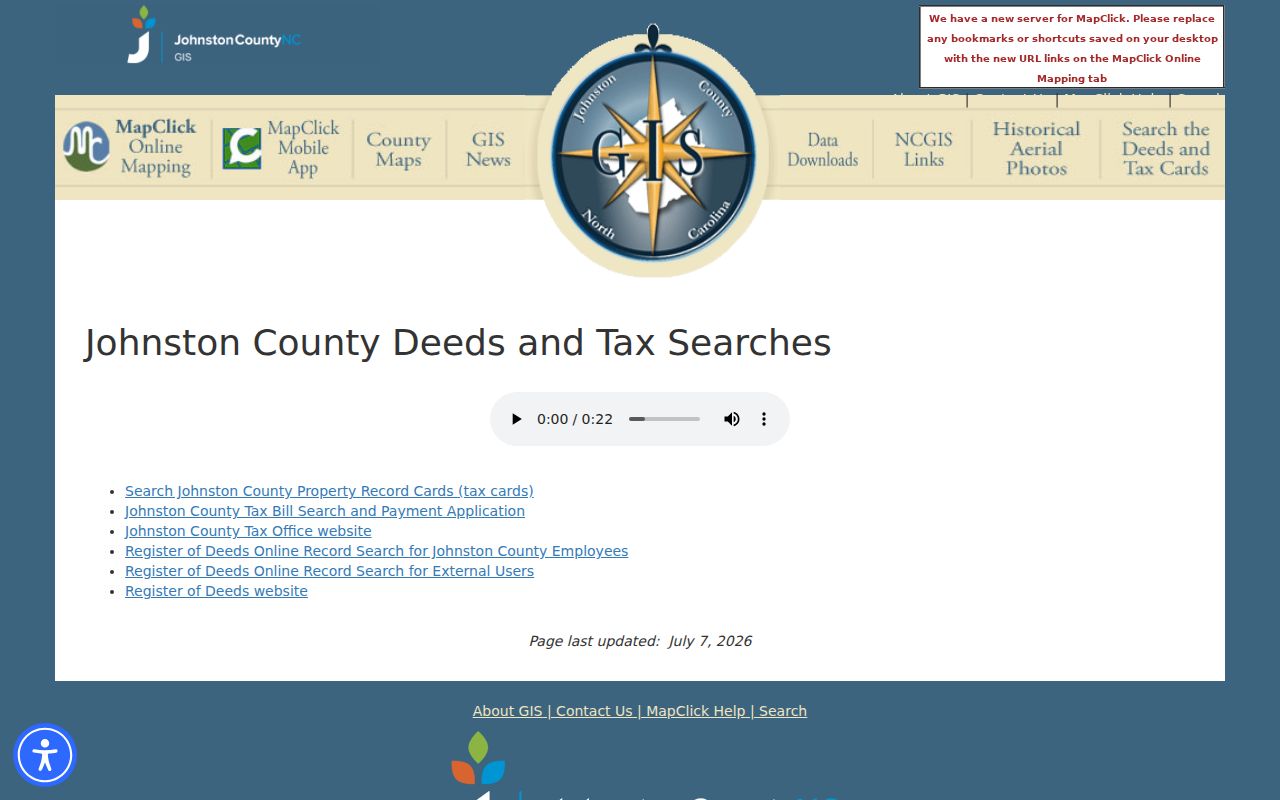
MapClick bridges postal labels and legal geography. That matters around Clayton and other fast-growing areas where a mailing city may not identify the government that keeps a permit.
Note: Use the county GIS gateway instead of an old direct MapClick bookmark after the July 2026 server move.
Trace Johnston County Deed Names
Once the tax card supplies an owner and book-page reference, move to the Register of Deeds public search gateway. Johnston County indexes land records by party name. Grantor means the party conveying an interest; grantee means the party receiving it. Search both roles, since one person can appear on opposite sides of later transfers. Date range, instrument type, book-page, and instrument number can narrow a common name.
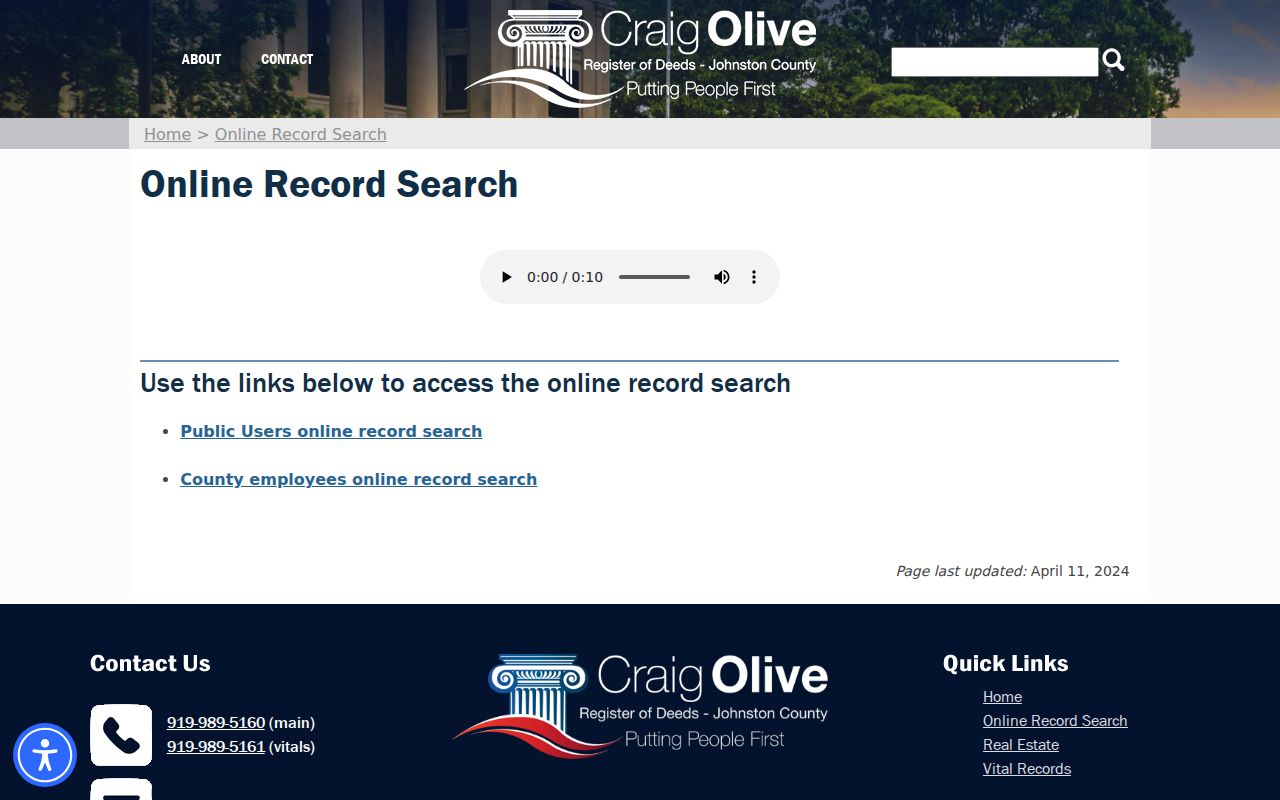
The gateway leads to the live vendor index. Its controls may change, so retain the book, page, instrument number, recording date, and exact indexed spelling rather than relying on a screenshot alone.
| Search detail | How it helps | Use with care |
|---|---|---|
| Party and role | Separates grantors from grantees | Try initials and name variants |
| Book and page | Points to a recorded image | It identifies an instrument, not a person alone |
| Recording date | Places the event in time | It may differ from signing date |
| Return address | May provide a dated contact point | It is not proof of present residence |
Follow a chain backward by opening the current deed, identifying the grantor and prior deed reference, then repeating the process. Plain land copies cost 10 cents per page and can be emailed free. Certified copies cost $5 for the first page and $2 for each added page. The Register does not determine clear title or give legal advice.
Search Johnston County Court Parties
North Carolina District and Superior Courts serve Johnston County. The free eCourts Portal services support party, business, record-number, citation, attorney, nickname, and hearing searches. Choose Johnston as the location when a name appears across the state. Results may show the case number, court, filing date, party roles, attorneys, events, hearings, disposition, and selected public documents.
The North Carolina eCourts Portal is the starting index for newer Odyssey-system material.
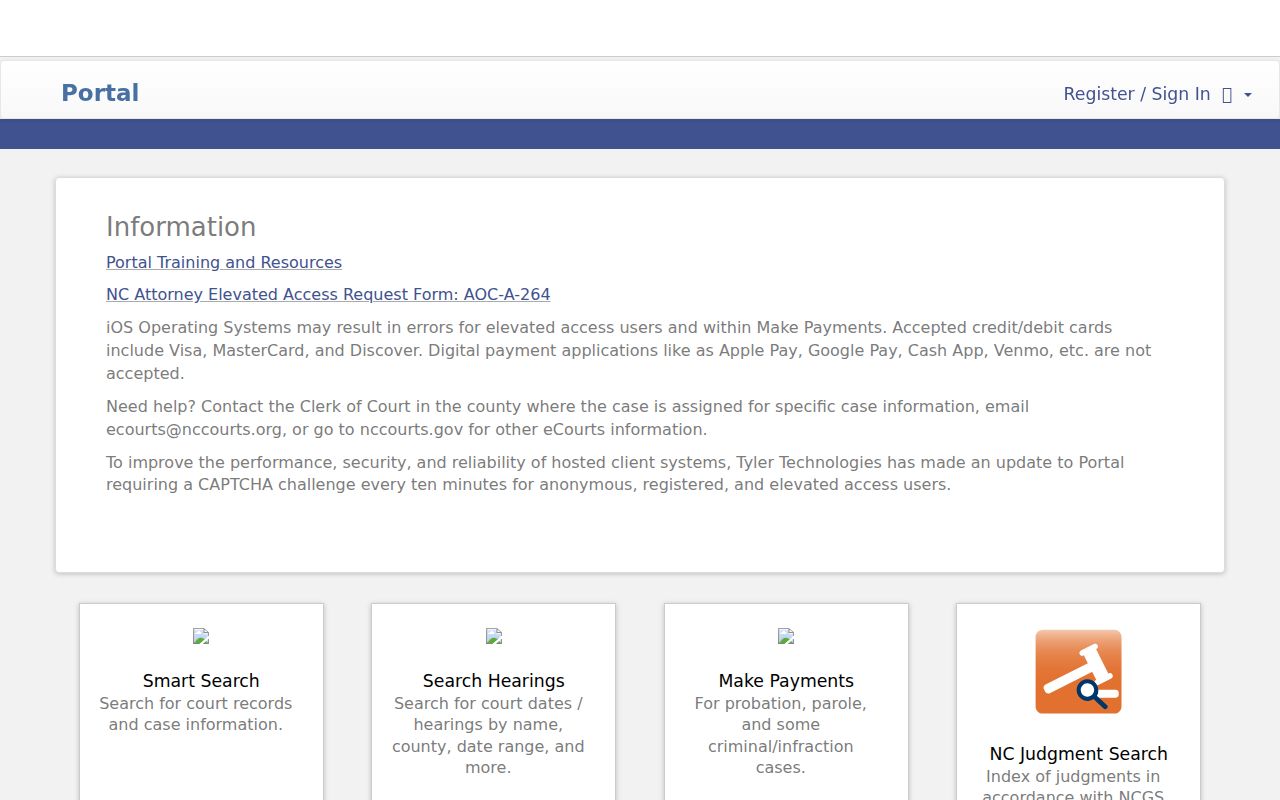
A portal result points toward the official file. It does not replace the Clerk’s docket, public terminal, or paper and electronic case file.
| Channel | Best use | Main limit |
|---|---|---|
| eCourts Portal | Recent party and case discovery | Selected documents and Odyssey-era coverage |
| Clerk terminal | Broader official index review | Requires a courthouse visit |
| Clerk file | Pleadings, estates, and judgments | Confidentiality review and copy fees |
| PACER | Eastern District federal cases | Account and usage charges |
Juvenile, adoption, sealed, expunged, and confidential family information is not open like an ordinary docket. A no-result can also reflect spelling, county choice, a legacy file, or limited online coverage. The Judicial Branch’s court-record access instructions explain clerk terminals and files. Use those channels before concluding that no record exists.
Johnston County Vital Record Paths
The Johnston County Register of Deeds issues local birth, death, and marriage certificates. North Carolina Vital Records holds statewide events, including divorce data, and has marriage records from 1962 forward. A divorce judgment comes from the Clerk in the county that granted it. The state certificate is not the underlying court decree.
Certified birth, death, and marriage copies are restricted under N.C.G.S. §130A-93 to eligible people and authorized requesters. Adoption and amended birth records receive added protection. Historical indexes are different. The state’s marriage-record guidance sends pre-1962 requests to the issuing county. The Heritage Center has marriage bonds from 1779 through 1867, marriage material extending into the twentieth century, and obituary records from 1801 forward. Those sources can identify an event without turning a restricted certificate into an open record.
- Index
- A finding aid that points to a record or event.
- Certified copy
- An authenticated office copy used when formal proof is required.
- Docket
- The court’s chronological list of case filings and events.
- Situs address
- The physical location assigned to a parcel, distinct from the owner’s mailing address.
Find Johnston County Heirs
Estate and special-proceeding files at the Clerk of Superior Court can identify a decedent, personal representative, heirs, creditors, and property connected to an administration. Start with the person’s name and approximate death date. Search eCourts, then ask the Clerk for the public file when the online summary lacks images. A decedent is the person who died; a personal representative is the person authorized to administer the estate.
Deeds can continue the trail. An estate deed, partition, foreclosure, or special proceeding may name heirs and link them to a parcel. Obituaries add married names and places, while cemetery, church, and Bible records can bridge older gaps. Keep each source date attached. A person named as an heir at one address may have moved long ago.
Johnston County Historical People Search
The Johnston County Heritage Center collections extend far past the modern web portals. Online databases cover census transcriptions, obituaries, Smithfield Herald headlines, marriage bonds, 1902 voter registrations, Confederate soldiers, deeds, and historical photographs. The reading room holds about 2,000 books, 800 microfilm reels, 300 maps and atlases, 50,000 images, and 400 private collections.
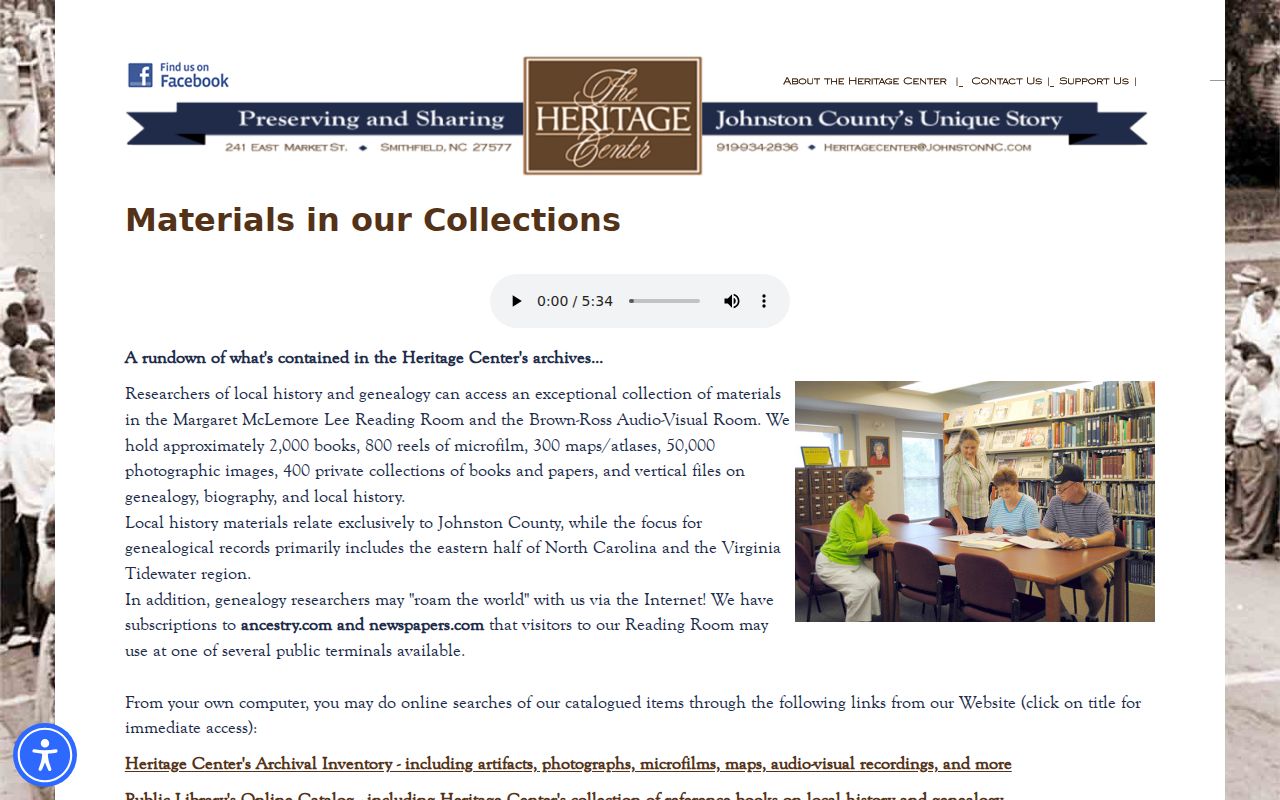
The collection page shows why offline research remains part of a Johnston County search. Deed microfilm reaches 1759 to 1947, other courthouse material begins in 1712, and yearbooks run from the 1920s to the present with titles varying by school.
Reading-room access is free on weekdays, with Saturday visits by appointment. A known newspaper item, will, marriage record, or photograph can be ordered for $5. Open-ended staff research has a $40 minimum. Give staff exact names, dates, town or township, and residence range. For African American family research, the county’s slave-name and cohabitation and slave-marriage indexes provide rare official paths into families that conventional records excluded or distorted.
Johnston County Business Name Search
A business filing can connect a person to a dated public role. The North Carolina Secretary of State business search can show a legal name, SOSID, status, formation date, registered agent and office, principal or mailing address, officials, annual reports, and filing images. Search by organization or by an individual officer. Treat each address as filing evidence, not proof of a private home.
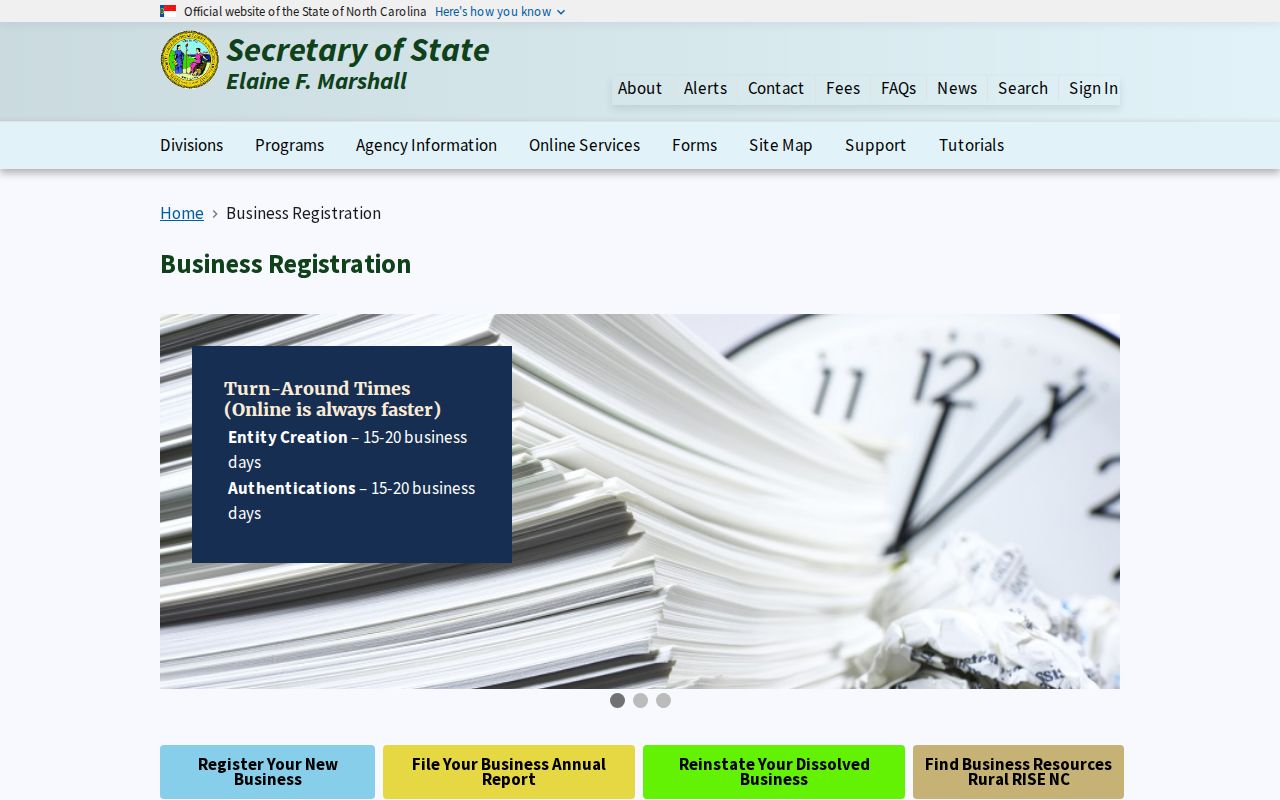
The official registration page explains the public filing system and leads into the entity search. Save the entity ID and filing date before following a name elsewhere.
North Carolina’s statewide assumed-name database covers filings from December 1, 2017. Older Johnston County DBAs must be checked with the Register of Deeds. Professional license records are kept by the issuing board, such as the State Bar, Medical Board, Board of Nursing, Real Estate Commission, or General Contractors Board. A license result confirms a regulated role and status as of its update, not personal character.
Read Johnston County Voter Results
The statewide NCSBE Voter Search can confirm a name, registration status, jurisdictions, polling place, sample ballot when available, absentee status, and participation history. It never reveals ballot choices. Use Johnston County as a filter, then compare middle initial and year of birth when common names appear. The full voter-registration treatment, confidential-field rules, and county data form are covered with the Johnston County voter registration lookup.
Residence addresses may be protected for qualifying voters under N.C.G.S. §163-82.10 and the Address Confidentiality Program. Dates of birth, Social Security numbers, voter email, driver-license numbers, and ID images are confidential. A public result is a civic record, not permission to contact or harass anyone.
Johnston County Boundary Search Traps
Postal city, town limit, ETJ, township, and county are not the same map. A Clayton mailing label may point to unincorporated Johnston County. Kenly crosses the Johnston and Wilson county line, so one person’s deeds and taxes may span two counties. Wilson’s Mills also lost its municipal charter in 1971 and regained it in 1996, which changes how older town records should be framed.
Use MapClick’s City Limit, ETJ, Township, Subdivision, and district layers before choosing a planning custodian. Municipal minutes and permits go to the town that created them; Johnston County’s public-records form should not be assumed to route a town request. For an obsolete road or farm description, compare historic aerials, plats, deeds, and tax cards instead of forcing the modern street name into an old index.
Protect a Johnston County Record Trail
North Carolina does not offer one broad consumer deletion law that erases lawful county records. Protection is record-specific. Chapter 15C supplies substitute addresses for eligible Address Confidentiality Program participants. Court sealing and expunction rules limit qualifying cases. Voter law protects defined identifiers and qualifying residence addresses. The Driver’s Privacy Protection Act controls motor-vehicle personal data.
Johnston County also provides a recorded-document redaction process for information the law permits it to remove from online display. Give the Register the exact book, page, and location of the material. Web redaction does not rewrite the legal instrument or recall copies already obtained elsewhere. FraudGuard can alert a subscriber to later recording activity, but it does not prevent a filing or replace prompt legal action.
Note: A public index is a finding tool; always inspect the dated source record and verify it with the office that keeps it.